The Therapy is Dandy Guidebook to having a Narcissist for a Parent. Chapter 8.

An ongoing survival guide.

Chapter 8.

Take the Test.

There isn’t an adult child of a narcissist who hasn’t asked themselves the question once or twice.

Am I also a narcissist?

Because despite no longer living in caves or mud huts, we humans still have a hard time not believing that crazy behavior is somehow contagious. So the longer one is around a narcissist, the deep tendrils of that personality disorder have had years to warp sensibilities, influence perceptions, misjudge actions, etc.

It is also possible that what the adult child is responding to, unconsciously, is the guilt of how the parent narcissist has treated others (not necessarily themselves). The child of a narcissist is often in a position to do much of the “repair” caused by a narcissist’s inconsideration to others.

There is good news and bad news here.

The bad news: some crazy behavior can be contagious. Group think for one. Suicide as well. But one does not simply become narcissistic by being exposed to another narcissist. If anything—and a major point of this guidebook—the adult child of a narcissist is very sensitive to narcissistic behavior and that sensitivity can over time become self destructive in nature, unhelpful, and an all around bad template for emotional engagement with others.

The good news: you can take the test and find out for yourself. In the spirit of transparency, I already took it and scored a 6.  What’s your score? Can you get the narcissist in your life to take the test? Good luck, if you can.

I included the test because I read this article about Simon Doonan of Barneys of New York. Simon’s article speaks to the other, more commonplace, use of the word narcissism. Simon and others like him are choosing to behave in a certain way. They can be modest, they can be less grandiose, but his point—and it is a good one—is that he chooses not to.  Our popular culture certainly rewards narcissism, and if you can make that form of narcissism work, everything in the western world seems to bow down and presents itself to you. Look at how much the cast of MTV’s Jersey Shore get paid.

This kind of narcissism presented not just by Doonan, but Oscar Wilde himself, is one where the relationship is purely the one you have with yourself. The kind of grandiose, fulfilling love you often see characters in Tom Robbins’ novels professing to have. This is not the same as the diagnosis of Narcissistic Personality Disorder, which centers around maladaptive behaviors the individual has with others in their life due to their own behavior and beliefs.

Oscar Wilde didn’t blame others for this bad hair days, in other words. Nor should any of us.

The kind of narcissism that gets classified as a mental disorder is not something one has a choice about. The narcissists that cause all the trouble, the ones with the DSM IV code of 301.81 can’t just stop being narcissists.

If there is one really good question a person can ask themselves to help determine whether they may or may not be a narcissist, it might be this one, and I will get to the explanation afterwards.

Do you always feel entitled to special or privileged treatment by others—strangers and friends alike—and when this does not occur, do you fall into a terrible depression and/or withdraw from the situation or do you respond with aggression and anger toward the person(s) who did not do what you expected them to do?

Narcissism is about unrealistic entitlement and either depression/rage when people in the environment don’t mirror back to the narcissist whatever their unrealistic agenda is: I am the best golf player in the world, I am the most beautiful, I am a gracious tipper when I eat out and make uncomplicated requests regarding the fixed restaurant menu, I am the most patient mother, I am the most powerful emperor the galactic empire has ever seen. Whatever.

Questions?

Chances are if you have a narcissist in your life, it is exhausting you. Writing about them is even exhausting. So, to wrap up this week: be more like Oscar Wilde.

Posted in Adult Children of Narcissists, Mental health therapy, narcissism | Tagged , , , , , , , , | Leave a comment

Suicide II

There’s a reason newspapers don’t report the details of suicides.

It is irrational, superstitious, bizarre, but also one hundred percent completely true.

Suicide is contagious.

Like cooties. But lethal.

The hard to accept truth is that when suicides have been reported in papers or television, the suicide rates go up. Just hearing about someone else doing it, increases the chances of a near suicidal person of giving it a go.

There is an association devoted to research and education regarding suicide. It may have a rather clunky name, but it is well worth taking a look at: www.suicidology.org

Research has been around for years about how quickly suicide rates go down when you remove the relative ease at which one can make an attempt. This research article describes how in Great Britain suicide rates went down (starting in the late 50’s) just because the government changed the kind of gas that was used in every British kitchen oven. After this one change, you couldn’t just turn on the gas and go out ala Sylvia Plath anymore.

Writers and suicide: 0 and 1.

People with a family history of suicide can have higher rates of suicide. Most people can recall Ernest Hemingway shot himself, but not as well known is that Hemingway’s father also committed suicide, as did two uncles, an aunt and his granddaughter.

The answer to why this occurs is because that particular door has now been opened. The before unconsidered option is now placed in front of the remaining relatives and friends. If it was okay for my dad, my brother and my sister, I guess it is okay for me too. That is the terrible legacy suicide leaves for the survivors.

Writers and suicide: 0 and 2.

So, yeah, I am still thinking about suicide a lot. And my client.

I want to surround myself with facts and figures and just the right anecdote in order to not feel so bad about what I do. But I hate that impulse because I imagine what the family is going through. My dilemma feels ridiculous when compared to what they are experiencing.

All that is left to do is to keep writing.

My next door neighbor told me the other day I have looked different for the past few months. So, that’s great. You can see it on my face. I don’t like that at all.

It’s bothering the hell out of me, to be honest.

I remember a news story from earlier this year where a broke, hopeless Greek man shot himself on the steps of parliament to protest the austerity measures the government had enacted. Suicide rates had already been on the rise in Greece, as well as nearly everywhere else. He became a symbol to the people of what the entire country was facing: an unavoidable downturn in prosperity and hope.

Feeling hopeless is a key indicator and danger sign to suicidal behavior. There is a lot of that going around these days—whatever country you happen to live in—and very few people willing to speak clearly about it. For us to make it, I mean really make it out of here in one piece—or make the world an actually good place to live—we have to learn to talk about how we feel—no matter what that is.

Not that it is easy.

It’s painful and it bothers the hell out of me.

It should bother the hell out of you too.

Posted in Mental health therapy, Suicide | Tagged , , , , , , , , | Leave a comment

Suicide

I suppose the preparation for this started sometime in graduate school. Someone in a lecture that I have no clear memory of said something like, “The longer one is a counselor, the chances of having a current client commit suicide goes up.”

And maybe this is surprising to you—because it was surprising to me—but out of my immediate circle of colleagues and fellow counselors, office partners, clinical supervisor, not one of them has lost a client in their private practice to suicide. Sure, in other settings, like inpatient facilities, or community mental health, or crisis services. But losing a client in private practice is different. All of my clients chose me to be their therapist. It wasn’t random, or by accident, or some health insurance bullshit. It is just me and them.

Without a net.

All of this leading up to: in the last few months a current client of my practice ended their life.

Naturally, I want to write about it. Before I was a therapist (and after, actually) I had aspirations to be an unsuccessful fiction writer, so writing has always been my fall back position. Writing about what has happened ideally will help me figure out exactly how I do feel about this and sharing what I can of this experience could benefit others.  That last part sounds magnanimous to me.  I know psychology and counseling are sometimes called the helping professions, and as much as I may dislike that label, it is true. It’s not like the triumvirate of apathy, anarchy, and assholery are actively improving the world.

Obviously I will not be talking about the client at all. This is simply my attempt at documenting my process.

A fellow writer who also works in the field advised me not to write about this too soon. But that’s not going to work for me. I want to do this now. I may end up writing about it a lot.

Among the support from colleagues and friends, I have been advised to seek out my own therapist, as well as continue consulting with colleagues and continuing my own clinical supervision. That’s a lot of talking, and I am not sure I have anything new to say about it. That’s why I have always liked writing.

But I don’t know how to start. Now that I have identified a wish to write about this specific topic, I can’t finish a paragraph without hating it with extreme prejudice. That’s a pretty good sign that I am feeling a lot of different feelings right now. I’m mad, grumpy, and angry more than usual. I’m isolating to a new level of hermit-dom. And for the first time in my private practice’s existence, I don’t want to be sitting in the office. I don’t want to do my job.  Not that I get a lot of invitations to go do something somewhere else, but still.

My first reaction to my own reaction (which should prove right there that I am a bonafide therapist) is to wonder if I will ever know how I feel about this. In a field where we encourage people to examine and reframe so much of their lives, I am finding an inability to “know” what I am supposed to know about what happened. And maybe I never will.

Is that honesty? Or defeat?

Even as I re-read what I have written, I am reminding myself that I need to be more concrete about what I am trying to put down here. Until recently, there was nothing quite as disappointing for me than to realize or be told by a client that I had lost them with my explanation in a session.

As final and as concrete as the idea of suicide is, I can’t get any closer to it with how I am feeling.

And that means something.

It makes me human.  It makes me just like everyone else.

Emotions don’t understand concrete.

Posted in Mental health therapy, Suicide | Tagged , , , , , , , | 1 Comment

The Therapy is Dandy Guidebook to having a Narcissist for a Parent. Chapter 7.

An ongoing survival guide.

Chapter 7. Stop Making Sense.

Welcome back. Since school is about to begin for so many, it felt like a good time to bring back the guidebook. And my other blog topic is quite the downer. So, stay tuned for that.

A sensible question for many who are considering counseling as well as considering their own childhood baggage is this: how do you make sense of what has happened to you?

Repression, avoidance, and denial appear to not only be characteristics of narcissists, but of Americans in general. Spending 20 minutes watching the news in this election season is proof enough of that, but it gets to the very real issue that adult children of narcissists need to consider.

Do you take time to reflect on the past to get over it, or do you just try to forget about it and hope for the best?

Philip K.  Dick once wrote that, “Everything in life is just for a while.”  By itself, it is a very important insight for most things. And an idea few people want to actually consider. As much as I appreciate the author and his novels though, the truth about personal trauma is, unfortunately, weighted differently. Some things in life—even the smallest, briefest experiences—can have a significant and long lasting gravity upon which everything else gets caught up in.

It is the secret explanation for all those news reports when the neighbors of the most recent middle class white male cuckoo bird decides to go shoot people in public, and the neighbors or acquaintances bend over backwards to say a variation of, “But he was such a nice guy.”

Well, no kidding. But even the nicest of guys (or gals) can have a dangerous fixation, a set of poor coping skills, an early childhood trauma that is destroying their ability to function, an addiction, a really dark secret, and on and on and on.  No one is ever just what they appear to be.

The children of narcissists know this better than most. They have seen beyond the curtain. And maybe that is why they can have so much guilt and/or difficulty reaching out for help for themselves. There is a fear there. A fear that they could be just like their parents.

Empty.

Shallow.

Full of nothing but themselves.

Well, that’s a load of horseshit. Thankfully. Disclaimer: there will be a lot more cursing in this chapter—I’m in a foul mood. Children of narcissists are not condemned to living out the kind of life they have seen their parents live. If anything children of narcissists are overly sensitive to emotional needs—their own and those of others.

Even narcissists can change. Albeit slowly and carefully. But remember: true narcissists rarely believe anything is their fault, and they rarely volunteer themselves to sit on a therapist’s couch.

So what does that mean to you?

If you reflect on the past, you are less a prisoner of it. It’s the whole, the truth shall set you free, and an unexamined life is not worth living, etc. But I am not suggesting everything will come up smelling like roses either. That would be either religion or politics talking. I am talking about human emotions. The messy parts of us that refuse to live in black and white boxes. Choosing to do the work doesn’t mean that you will find ultimate peace or understanding, but you won’t be living a lie anymore, or doing as much stupid shit that you otherwise would be doing.

That’s the sales pitch. If you want something more, then you want something else.

Avoiding the past just means you are still ruled over by it. And I don’t know about you, but I am so sick and tired of those rules. I want to make some of my own.

Who’s with me?

Posted in Adult Children of Narcissists, Mental health therapy | Tagged , , , , , , | Leave a comment

The Star Trek Personality Matrix, or Who the hell is in charge of this spaceship?

The first time I heard of Captain Kirk, Mr. Spock and Dr. Leonard “Bones” McCoy as analogues for the Freudian concepts of the Id, the Ego, and the Super Ego, was in the late 90’s from science fiction writer Peter David. I loved the use of pop culture icons to better illustrate what good old Freud was getting at.

Whether you believe in Freud or not, whether you agree with who is fulfilling which concept, this is still lots of fun. So, let’s get started.

Kirk as the Id.

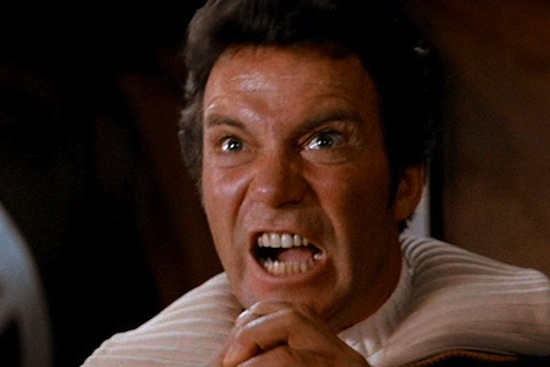
The Id is all about the pleasure principle. It’s the part of us that just wants to fuck and eat and have fun. It also always wants to win. To dominate. To be the best.  To hell with morals and societally expected norms. The Id, like Kirk, will cheat whenever possible to get whatever it/he wants. Kobayashi Maru, anyone? That Kirk is so easily identifiable with the Id makes sense not just for his numerous libidinous cravings, his quick descent to anger (even madness) when provoked, but also for his unending deep-seated need for exploration and excitement. The reason Kirk couldn’t be happy with that desk job as Admiral is because of the Id. He wanted to be out in the shit. And naked. A lot.

Spock as the Ego.

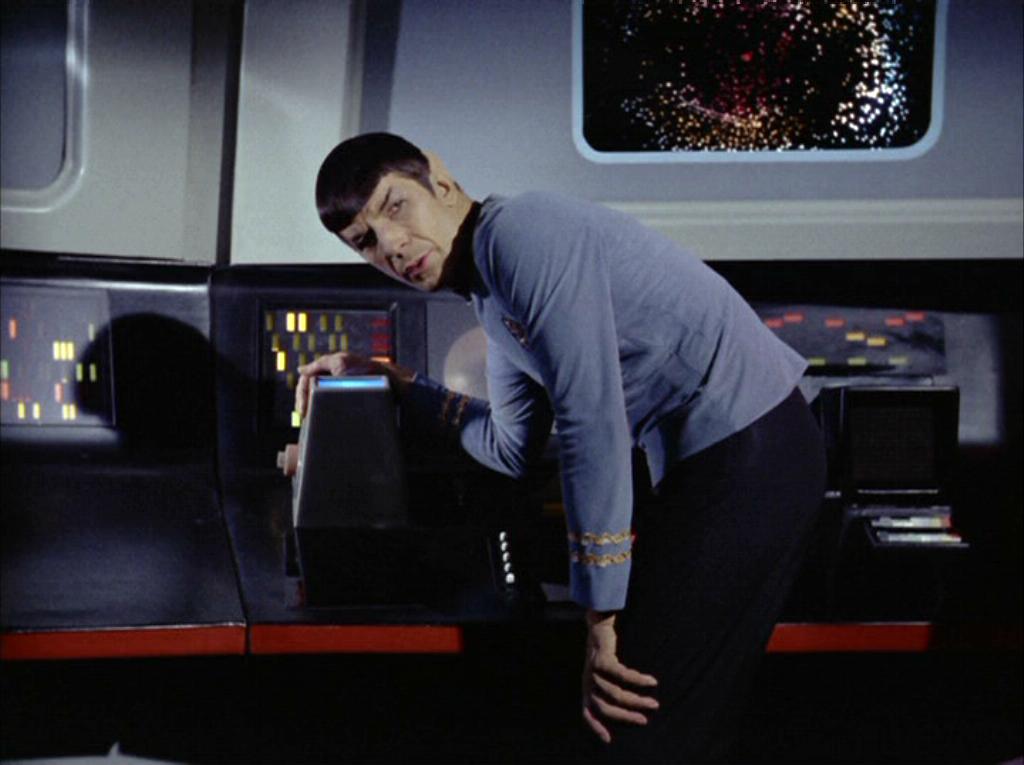
The Ego is where all the boring maintenance kind of behaviors take place (they have to happen somewhere). The Ego is responsible for much of our behavior, and, accordingly, it thinks it is the boss of everything else. So, having Spock embody the Ego actually makes it a little bit more sexy than it really is. Because, hey, everyone loves Spock.

If the Id is the pleasure principle, the Ego according to Freud is all about the reality principle.  This includes things like waking up early enough to catch the bus to go to work. Eating a balanced breakfast that includes Bran. Getting to sleep at a reasonable time. Spock excelled as the Science Officer on the Enterprise because it was his job to make sense of everything the spaceship encountered. When they find a hole in space and end up traveling back in time, who did everyone look to for an explanation? Spock. When they discovered that rock creature that looked liked a giant meatball, who tried communicating with it? Spock. Who was the only person on the bridge smart enough to look through this machine for explanations? Spock. Spock, Spock, Spock! All this talk of Spock and the Ego, and is it any surprise that Spock thinks he is the most important person ever? Both Spock and the Ego act as if they are the most important part of the ship/psyche. Hello? It isn’t called Ego for nothing. Spock and the Ego are the workhorses of this particular theory of human behavior.

The Ego and Spock likewise have numerous disadvantages than can skew the results and expectations of the entire human being or starship. Freud believed the Ego used numerous defense mechanisms to avoid unpleasant anxieties. One of those defenses is called intellectualizing, or the attempt to remove emotion from one’s experience of life. Spock as a Vulcan also practiced this defense by the societal decision to repress the emotional aspects of their psyche. So to Spock and the Vulcans the Id really is giving in to the devil. They just refuse to go there. Likewise, the Ego and Id are in constant competition for immediate gratification of the senses, and, you know, the benefits of having a job, decent friends, and a place to live.  The fact Kirk and Spock hated each other in the beginning (at least in the newer movie) but eventually become best friends (in the older movies) speaks to the power of opposites.

Bones as the Super Ego.

In between the larger, flashier roles of Kirk and Spock, Id and Ego, is Bones and the Super Ego, the most complicated of the 3 parts of Freud’s version of the psyche. The Super Ego is not just our conscience, it is also the part of ourselves that embraces and believes in the power of human potential. It is the part of us that believes in the needs of the many outweighing the needs of the few. It governs behavior from a moral and societally relativistic position.

As a result, the Super Ego insinuates itself and manipulates both the Id and the Ego from taking over the entire show.  Who is constantly outraged by Spock’s “cold blooded” rational demeanor and stark decision making? Bones. Who keeps Kirk from shooting every sentient alien life form they discover and/or getting space STD’s? Bones. Who can argue both Spock and Kirk into invalidating their own decision-making processes? Bones. Who is the only person on the show always telling other people what he is as opposed to what they want him to be? Bones. If the Id represents the emotions, and the Ego represents actions, then the Super Ego represents the spirit of man.

Kirk. Spock. Bones. They work so well together because they fit together, and they work off each other. When Spock goes through Pon Farr and becomes more Id-like than Kirk, everyone (including the television viewers) knows something is just wrong. Out of synch. When Kirk (as he was want to do) goes completely mental in certain episodes, either Spock has to use the Vulcan neck pinch on him, or Bones has to sedate him. So there you go: the Ego and the Super Ego keeping the Id in check. Until next week.

And the Mirror Mirror episode involving the alternate universe where Spock has a goatee and Chekov is trying to kill Kirk and Uhura is nearly naked? That is an example of characters with absolutely no Super Ego. Sociopaths basically. And what a kick, what an obsession, we collectively have in alternate reality storytelling where we can enjoy viewing characters we so identify with but suddenly are dark and unredeemable. Dark Willow from Buffy the Vampire Slayer, and Bolivia from Fringe also fulfills that role.

Wasn’t that fun? This is what therapy can be like. So give me a call and we can start.

Next time: The Gilligan’s Island Astrological Appendices. (Just kidding, but thanks go out to DBT for telling me about it.)

Posted in Mental health therapy, Therapy | Tagged , , , , , , , | 5 Comments

Tales from the Reptile Brain

This isn’t the part of you that wants to share your feelings. This isn’t the part of you that wants to talk, or articulate, or navel gaze, or pontificate on the benefits of home brewed beer.

It is about survival. It is about safety. It is about fight or flight.

Survival. Food. Water. Shelter. Sleep. Comfort.

Even if there is no danger literally in the room with us, we can still let the Reptile Brain run the show.

The unfortunate truth is that any manner of traumatic event can push people into Reptile Brain territory. Because it is the oldest part of our brains, the part that got us through living in the long ago past with nothing but bigger and scarier predators more than happy to eat every last one of us, we can have a hard time realigning ourselves to a not-traumatic and danger-filled present.

It is explains why every member of the armed services who has experienced intense combat has difficulty returning to suburban life.

It explains why some might be prone to hoarding or “retail therapy” forms of shopping. The more stuff we have, then the safer and more comfortable we feel.

It explains why someone who just got downsized, or laid off, or lost their house, or otherwise fell victim to the Great Recession of 2009, is having a hard time feeling connected to his or her family.

It’s the part of the brain of Bruce Wayne where The Batman was born.

The Reptile Brain is selfish, monosyllabic, cold, angry, amoral, and it doesn’t ever not want to be control.

So, welcome to the party!

Remember what I said about mindfulness last week? Good. The Reptile Brain likes to think it is the only way we can get out of whatever crisis we happen to be in.

Thankfully, the Reptile Brain can be kind of stupid and is very much wrong about that.

The kinds of trouble you and I can get ourselves into these days is very different than from our cave dwelling ancestors, and those troubles can be resolved with lovely things like: communication, imagination, feelings, logic, articulated and cohesive arguments, charm and flattery—to say the least.

What keeps the Reptile Brain’s hold over us despite our logical and thoughtful ways is our own dark and unwanted feelings. Fear mostly.

Exploring the reality of those fears and then reintegrating that chapter of your life with the rest of your not traumatic experiences is a goal that individual therapy can help you attain.

It is not easy work. The Reptile Brain has survived for a long, long time in humans. But the cost of walking around everyday in nothing but survival mode is too high for most of us.

Until the Zombie Apocalypse arrives that is.

Posted in Mental health therapy, Therapy | Tagged , , , , , , , , , | Leave a comment

Mindfulness or Else.

So you have been reading blogs about therapy, or you have a new book on relationships or PTSD or family of origin concerns, and you are enjoying it for the most part. Then somewhere in the book or blog you get introduced to mindfulness.

The philosophy, the mediation, the mental exercises, the DVD and the t-shirt.

That makes you stop for a moment to think about where else you have heard about this thing mindfulness. In essence, you practice mindfulness itself to pause and recall that nearly every blog or book or manifesto regarding psychology that you have read suggests mindfulness activities, exercises or mediation.

Then you think about the last therapy session you had. Even if it was five years ago. Your mind plays the event back to you in slow motion and sure enough there it is: your well-meaning therapist gesticulating in the air vaguely and mouthing the words: L-E-T-S–P-R-A-C-T-I-C-E–S-O-M-E–M-I-N-D-F-U-L-N-E-S-S.

Am I right or am I right?

So what the hell gives about mindfulness?

And why is it that nearly every single book on therapy has an obligatory–and often awkwardly edited-in–chapter on this subject?

The skinny on mindfulness is that it works. Across all theoretical orientations, everyone is getting on board: the Adlerians, the psychodynamic people, the Rogerians, the CBT folks, and everyone else at the party is integrating mindfulness and their particular therapeutic viewpoint.

And unlike other interventions, technology has advanced enough so that we can see the structural changes to the brain when mindfulness is practiced. For a science that gets called out so often for being “soft” the newest brain imaging scans are now able to show what effect positive behavior (mindfulness) can do to the brain, as well as what bad behavior (smoking meth) does.

Good times. But that’s not all.

Mindfulness increases our self-awareness and it makes us more adaptable to stress by getting in the way of our natural fight or flight response. When we incorporate it into our lives, mindfulness gives us better options in dealing with stress, trauma and acute emotional experiences. But only if you are adept at practicing mindfulness before the aforementioned stress, trauma and acute emotional experiences.

The truth about mindfulness is that it can make you stronger. And the bottom line about therapy is becoming fucking stronger. I don’t mean the fake, deny your emotions, American-esque action movie strong. I mean being aware of your own personal and emotional blind spots, appreciating your own personality and quirks, and being able to adapt and embrace change whenever it comes your way strong. It’s not stoic, constipated John Wayne, but nimble and flexible Bruce Lee.

Bruce Lee had an oft-repeated phrase that was at the root of his own personal philosophy: be like water. It is, at its heart, a poetic expression of mindfulness.

The mantra for the rest of the week is to be more like Bruce Lee. Or else.

Posted in Mental health therapy | Tagged , , , , , , , , , , | Leave a comment

Read these other articles someone else wrote.

If you are anything like me and when summer finally arrives in the Pacific Northwest right around Independence Day with a disappointing amount of humidity and requisite stickiness, you seek the solace of air conditioned spaces and quietly contemplate how your ancestors survived a single summer without 8000 BTU’s of freon cooled air circulating through your office and/or bedroom.

Which is a complicated way of saying the summer always makes me feel lazy.

So, after finding these two articles this week on the web, I can’t think of a way to write a better blog, so for god’s sake read these instead.

Take your pick:

Fantastic article all about sex.

Fantastic article all about being stupid when we think we are being smart.

Not to say that either subject is mutually exclusive.

Enjoy!

And you’re welcome.

Next time: my explanation for why almost every contemporary book written about therapy or self-help has a chapter on mindfulness and/or meditation. Tip: it’s not why you might think. Intrigued? Stay tuned for next week then.

Posted in Mental health therapy, Therapy | Tagged , , , , , , | Leave a comment

Not Hulk Fault.

Continue reading

Posted in anger, Mental health therapy, Therapy | Tagged , , , , , , , , , , | 1 Comment

The Therapy is Dandy Guidebook to having a Narcissist for a Parent. Chapter 6.

An ongoing survival guide.

Chapter 6:  Scanning your environment (Narcissism begets Capitalism, or Capitalism begets Narcissism)

We are the culture that came up with the slogan “Greed is good.” And then keep on proving this mantra to be true every decade since—whether we want to believe it or not.

So why don’t we just all get on board the narcissism train since we are collectively moving in that direction anyway what with our 99% versus the 1%, our reality television celebrities, our insatiable desire for memoirs, our future hope for customizable babies and personalized gene therapy, etc.?

Let’s take a look at the legacy of narcissism. How is it that within two generations we moved from the survivors of the Great Depression to the kind of real life villains that Gordon Gekko was an example of. Charles Keating and Michael Milken, I mean you, and all those S&L bailout goons.

Chances are your narcissistic parent had a pretty rough childhood. Maybe they don’t really talk about it at all, but one commonality that seems to hold up is that narcissists cast their own parents in very black and white terms: they were either saints or the devil.

And don’t even try to get them to think otherwise. Narcissists thrive on black and white thinking. It props up all their own ego needs, keeps them from experiencing the truth of their own behavior, and the lack of real contact in the supposedly close relationships around them.

Let’s try to imagine we are them for a minute. If their parents were either saints or the devil himself, then there is no chance for them to have any real kind of relationship. How can you compare yourself, let alone compete, with a saint?  You can’t.  Read Angela’s Ashes if you don’t believe me. And if their parents were the devil, then clearly they can’t sustain a meaningful relationship with them either. So, the narcissistic parent has no history of truly reciprocal relationships either to fall back on, or to mold what their appropriate behavior should be toward their own children. And this is where you, the reader and adult child, get caught when you try to voice your own criticism or complaint.

“If you had my father for a parent, you would be damn grateful for all that I have done for you.”

“How can you begin to criticize me when I put food on the table every day and didn’t make you go work down in a smelly, cramped mineshaft like I did for my parents.”

Or whatever variation of the “having to walk to school in the snow without shoes uphill both ways” that your parent usually uses to narrate their childhood horror stories with.

What does this mean? And how can we use it?

Well, for one, if you can get your parent, or the narcissist in your life, to start asking questions about their own difficult history. It gives you the opportunity to carefully be empathic about their experiences. You can ask them for more information—because you are honestly curious—and see what and where they go with the opportunity.

Our parents and certainly their parents had a completely different idea about what represented appropriate behavior and effective communication between parent and child. In a way trying to document the difficulties in having a relationship with a parent—narcissist or not—is going to run head long into this issue. Is it only in hindsight that the behavior is as unappealing and unattractive, as unhealthy, as we are making it? Anyone over the age of 30 can appreciate how time changes the way in which we tell our stories. In changing the way we tell our stories, it can certainly change our relationship to our history.

Which is exactly what Oliver Stone showed us in his actually worth seeing sequel to Wall Street. Gordon Gekko revisits his catch phrase and amends it: “Someone reminded me I once said, ‘Greed is good.’ Now it seems its legal.”

Replace Greed with Narcissism and legal with expected.

Unfortunately for the adult child of a narcissist, there is rarely a happy Hollywood ending as a means of happy closure.

Of course this talk about revising memories is not logical. No. Memory and emotion are far more connected than people like to think, and at this point we don’t have any easy way of separating the two into safe, separate subjects. Ask anyone who has PTSD and they will tell you the proof of this. If anything recent research on long term memory suggests all long term memory is reconstructed every time we think of that memory. And don’t get me started on the manipulative power of peer pressure.

Where all of this is taking us is the difficult to accept place where your memories of your childhood and your parent’s memories of your childhood often will look nothing like one another.

Next time:  Should you compromise with the narcissist in your life?

Posted in Adult Children of Narcissists, Mental health therapy, Therapy | Tagged , , , , , , , | 2 Comments